
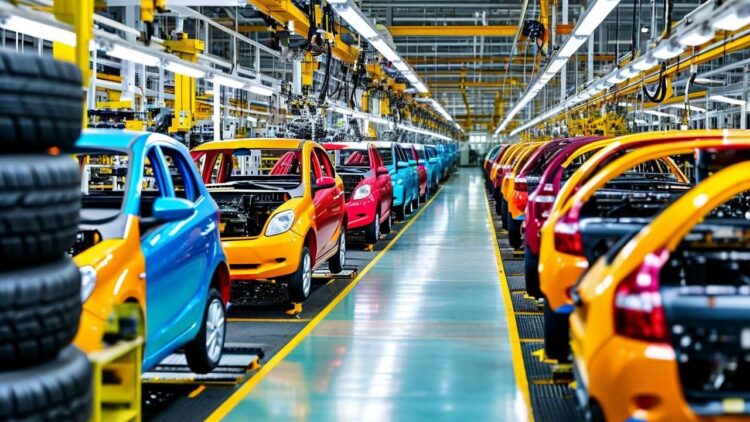
The Indian automobile industry has steady growth, even with rising costs, considering 2025 was a record-breaking year. With 2026 coming, the speculation of Indian auto growth is increasing. The article covers everything you wish to know about its growth in 2026.
The year 2025 has seen record sales in the automobile sector thanks to the GST reforms, the shift towards EVs, and other factors. The report says the passenger vehicle sales have surged higher after a slow start in 2025.
The localization of cars, two-wheeler vehicles is increasing, and automakers are shifting to electrification, considering the demand. Industry analysts consider that 2026 will bring steady growth, generate employment in the industry.
What is India’s Auto Industry growth forecast for 2026?
The Indian automobile industry will have a great start in 2026 with steady growth, as 2025 will end with record sales. With a strong footing, the automobile industry will enter the new year with high sales growth. According to the industry analysts, the industry can see an increase in sales growth from 6% to 8%.
The 2025 momentum of the automobile industry is strong, with growing interest in electric and CNG vehicles, SUVs, and transition vehicles. The current festive sales and offers will add to the sales growth of 2025. As the automobile industry stands strong, the investment cycle is shifting due to the need for charging infrastructure, EV demand, and platform upgrades.
Foreign brands are opening manufacturing plants in India, considering the increasing automobile market growth. The passenger vehicle is growing steadily, but the commercial vehicles are also increasing with an infrastructure push.
What is driving India’s Auto Industry growth?
The Indian auto industry is set for steady growth in 2026 due to the following driving factors:
- GST Rationalisation: The government has recently rationalized the GST reforms in September 2025, reducing the tax burden on vehicles, making them affordable for customers. This will also help the automakers to comply with the industry standards.
- Tax Benefits: The recent GST cuts for small cars and bikes to 18% from 28% and 5% GST for EVs, and other models will allow customers to have some tax relief. The lower taxes will reflect on lower prices will benefit the middle-income earners to buy their own car or vehicle.
- Simplified Financing: One of the reasons for the steady growth of the Indian auto industry is the easy and simplified financial options that allow everyone to afford their vehicle.
- Rural Income Stability: The stable rural income and the current festive season have contributed to the stable growth of the Indian auto industry.
- Government Policies: The government initiatives, like Make in India, PLI Schemes, and others, have attracted foreign investment and supported advanced technology for the industry that will elevate the growth eventually.
What are experts saying about the Indian Auto Industry growth in 2026?
Let’s gather the industry experts’ or analysts’ predictions or point of view for the 2026 Indian auto industry growth:
- The Federation of Automobile Dealers Associations says that 74% of the dealers can expect growth in the December-February period, and the momentum will carry forward into the first half of 2026 if OEMs avoid sudden price hikes, improve inventory management, and follow the industry standards.
- The Society of Indian Automobile Manufacturers’ President states that all segments in the auto industry will see high growth over the previous years. The SIAM reports that they expect double-digit export volume growth for all segments, and the brand will embrace the Made in India vehicles.
- The ACMA also expects that the industry growth will add to the domestic automotive components industry, which will reduce the cost of vehicles.
What are the challenges for India’s Auto Industry growth?
The current Indian Auto Industry is experiencing steady growth, and it is expected to continue until 2026. However, the industry can face several challenges that can roadblock the growth, such as:
- Year 2026 will be a preparatory year for the automakers as the CAFE III norms will be effective from 2027. The rigid emission standards will affect the vehicles’ production cost, ultimately increasing the cost of vehicles.
- With the electric vehicle demand increasing, the need for the charging infrastructure is increasing. For now, major cities have a strong infrastructure; hence, for the rapid expansion of EVs, the demand for charging infrastructure needs to be fulfilled.
- The hybrid and CNG vehicles are dominating the market, but this may slow down the EV transition.
- The global tariffs and supply chain challenges can impact the auto industry’s growth as they can affect the cost.
Industry experts are optimistic about the Indian auto industry’s growth in 2026, thanks to the government reforms, diversified vehicle segment, and green mobility demand.